Colorful Animal Notebook Labels for Kids: A Design Toolkit
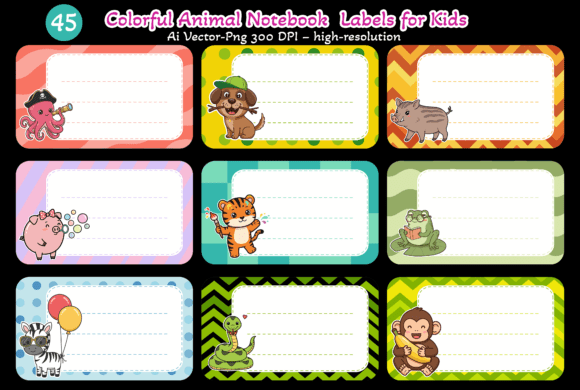
As a designer who frequently works on branding for educational products and family-oriented startups, I often see a disconnect between the assets available and the actual needs of the project. We usually get one or the other: either overly complex vector art that requires heavy editing, or low-resolution clipart that falls apart in print. When I came across this collection of Colorful Animal Notebook Labels for Kids, it struck a rare balance. It functions less like simple clipart and more like a cohesive design system—a set of 45 distinct visual identities packed into a single download.
Visual Personality and Asset Architecture
First, let’s talk about what you are actually getting. This isn't just a folder of random images. The collection provides 45 unique PNG files sized at a substantial 6238x3647 pixels. That resolution is critical. It means these assets are truly print-ready. You can scale them up for posters or bulletin boards without losing crispness, a common headache with lower-quality design assets. However, the real value for professionals lies in the included AI vector source files.
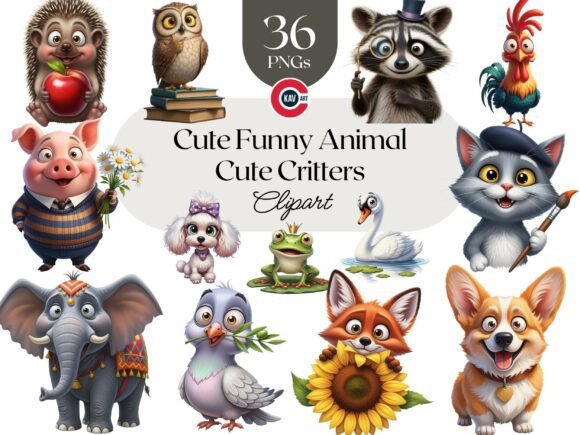
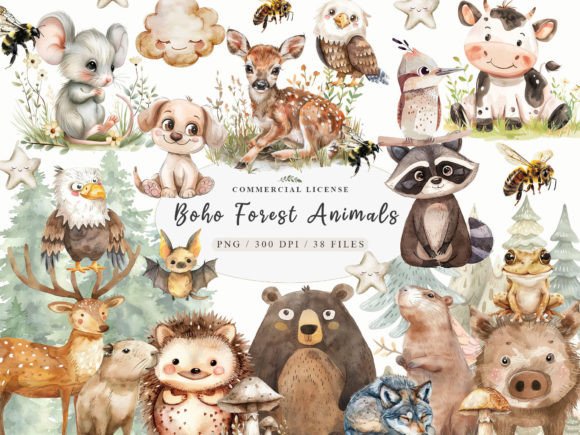
Visually, the style is rooted in a friendly, modern aesthetic. The illustrations—ranging from a wise owl to a cheerful snail—use soft lines and vibrant, child-friendly color palettes. This isn't the jagged, pixelated art of the early 2000s. It feels contemporary, utilizing the kind of flat design principles seen in modern app interfaces and high-end children’s publishing. The personality is playful but organized, making it versatile enough for various creative contexts.
Strategic Applications for Designers and Entrepreneurs
While the product description targets school supplies, the utility of these Colorful Animal Notebook Labels for Kids extends far beyond a parent labeling a binder. If you are a small business owner launching a product line—perhaps organic snacks for children, educational toys, or daycare services—these vectors are a foundational brand identity kit.
Imagine building a logo design for a pediatric clinic. Instead of commissioning custom illustration from scratch, which can be costly, you can take the "Koala" or "Lion" vector, tweak the anchor points in Adobe Illustrator to change the expression or color scheme, and create a mascot that is legally yours to customize. Because the source files are vectors, you have total control over the visual hierarchy and color grading.
For packaging design, the possibilities are equally robust. If you are a crafter selling homemade goods on Etsy, you can use these assets to create sticker sheets, thank-you cards, or product tags. The high DPI ensures that when you send these to a print shop for editorial design or physical merchandise, the edges remain sharp. It bridges the gap between digital social media graphics and physical print media seamlessly.
Integration with Typography and Layout
One of the challenges with character-heavy design assets is integrating them with text. A loud image can easily overpower a headline, ruining the readability of your layout. These labels, however, are designed with "breathing room" in mind. The colorful backgrounds act as frames, which actually helps in web design and packaging design where you need to place text near the imagery.
When pairing these illustrations with typefaces, think about contrast. Since the art style is rounded and organic, you might want to pair them with a clean sans serif font for a modern, approachable look—think something like Poppins or Nunito. Alternatively, if you are going for a more whimsical, storybook vibe for a creative font project, a gentle script font or a handwritten font could work, provided it remains legible. Avoid heavy serif fonts or overly decorative display font styles that might compete with the intricate details of the animal illustrations.
Practical Workflow and Licensing Considerations
From a workflow perspective, having the AI vector source files is a massive time-saver. It allows for non-destructive editing. You can isolate specific elements—like the seashell or the octopus—and use them as standalone icons for a web design UI kit, or rearrange them for a complex collage in a magazine spread. This level of customization is what separates amateur projects from professional brand identity work.
For marketers and content creators, these assets offer a quick way to produce consistent content. If you are running a campaign for a "Back to School" season, you can generate dozens of social media graphics using different animals for different posts, maintaining visual interest while keeping the theme consistent. This variety helps in sustaining audience engagement without the campaign feeling stale.
When utilizing assets like these, always verify the licensing for your specific use case, especially if you are using them for commercial merchandise or large-scale distribution. However, for internal branding, client mockups, educational materials, and small-batch production, a collection of 45 unique designs offers an incredible return on investment. It provides the variety needed to maintain consistency across a large project without the monotony of repeating the same single image. By leveraging the vector files, you ensure that your final product—whether it’s a digital ad or a physical notebook—retains a high level of professionalism and polish.